Hanoi is finalizing its new-style rural area development program for 2026-2030, focusing on classifying communes into groups, clearly assigning responsibilities, and evaluating results based on the quality of the environment, services, and livelihoods of residents.
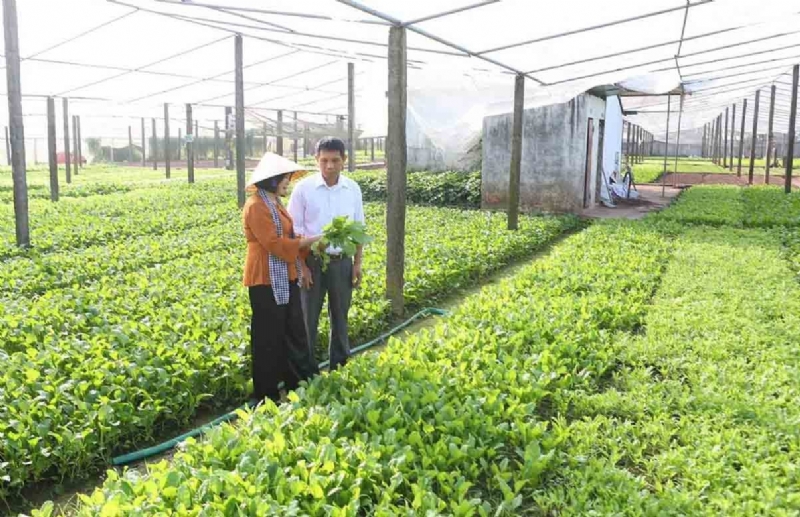
Safe vegetable production model
Reviewing Criteria and Identifying the Right Tasks
In 2026, Hanoi is focusing on reviewing new-style rural area criteria in 75 communes, identifying outstanding tasks and developing appropriate roadmaps for each locality. The requirement is not merely to complete the dossiers for recognition, but also to maintain the quality of the criteria and address issues that directly affect production and people's lives.
The communes must correctly identify outstanding tasks, responsible persons, timelines, and resources. In Kiều Phú, according to Deputy Head of the commune's Economic Division Trần Hùng, the contents under the set of criteria have been assigned to leaders and specialists according to the requirements of clear people, clear tasks, clear timelines, clear responsibilities, clear procedures, and clear results. The locality aims to complete the recognition dossier in 2026.
In Hát Môn, the review results as of June 2026 showed that the commune had achieved 31 out of a total of 47 national indicators. Outstanding items have been incorporated into the plan in order of priority. The locality is also linking new-style rural area development with the private sector, high-tech agriculture, and ecotourism, rather than treating them as a separate group of tasks.
The review is not intended to create more spreadsheets. The results must identify infrastructure projects requiring investment, services that need improvement, production models capable of generating income, and tasks that can mobilize enterprises, cooperatives, and residents. Without a specific list of tasks, resources can easily be dispersed among items that have little impact on people's lives.
In 2026, Hanoi is expected to complete the procedures for recognizing three communes as meeting the standards. The city aims to have 80% of its communes meet new-style rural area standards and 20% meet modern standards by 2030. Alongside progress, the quality of the criteria must be maintained after recognition.
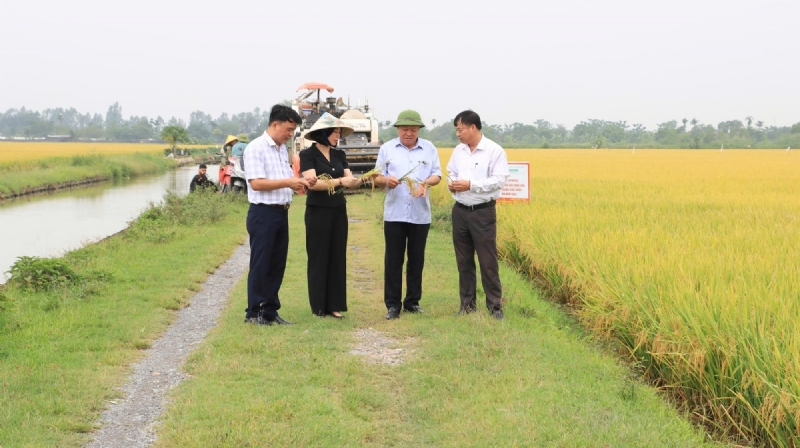
Hanoi develops the rural economy
Measuring Results by Quality of Life
Under Decision No. 2376/QĐ-UBND, the 75 communes are divided into two groups: areas with favorable development conditions and rapid urbanization, and areas that retain strong agricultural or mountainous characteristics or are far from the center. The classification helps avoid imposing a single approach on communes with different conditions.
Deputy Director of the Hanoi Department of Agriculture and Environment Nguyễn Đình Hoa emphasized: “The classification is the basis for localities to properly assess their conditions and current situation, thereby determining an appropriate implementation roadmap.” According to him, this approach helps limit scattered investment and ensure that resources are used in the right priority areas.
Hanoi's draft set of criteria sets higher requirements for waste sorting, wastewater treatment, livestock waste, agricultural by-products, and water source protection. These tasks cannot be completed through a single campaign. Waste sorting must go hand in hand with separate collection; water supply must ensure quality and stable operation.
Decision No. 4364/QĐ-UBND dated August 18, 2026 on monitoring rural clean water reflects this approach. The city assesses access to water meeting standards, water supply levels, and the condition of centralized facilities. The results are used to appraise the criteria and identify deteriorating or inefficiently operated facilities for corrective action.
Phúc Thịnh and Thư Lâm have been selected to pilot green, circular models in agriculture and the environment. Phúc Thịnh is focusing on protecting ecological corridors, controlling emissions from construction projects, and supporting livelihood transformation. Thư Lâm is focusing on the green transformation of the wood craft village, treating air emissions and wastewater, and strengthening safe vegetable, seed production, and aquaculture value chains.
The effectiveness of the models is verified through air quality, water sources, drainage capacity, waste treatment, and green-space coverage. Data on land, production, sources of emissions, and irrigation are updated on digital maps. Residents participate in identifying priorities and monitoring progress, bringing the criteria closer to the everyday lives of residential communities.
At the community level, the city's Farmers' Associations at various levels have implemented models for treating organic waste, agricultural by-products, and livestock-related pollution. Their value lies in the ability to maintain them on a daily basis and create new habits in production and daily life, rather than merely improving the appearance of the landscape through periodic campaigns.
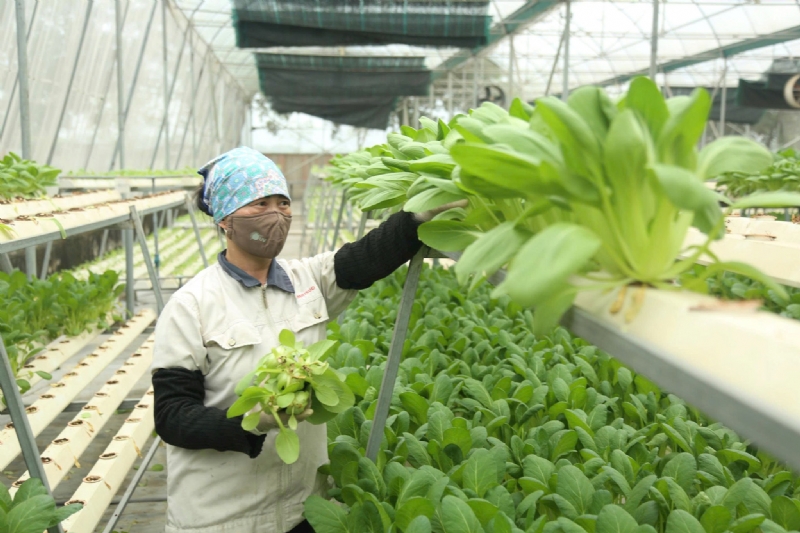
Hanoi developing a multi-value rural economy
Businesses Need to Be Given the Right Role
The new phase creates demand for investment in water supply, wastewater treatment, waste collection, by-product recycling, storage facilities, traceability, and rural tourism. Businesses can provide technology, services, and markets when local authorities make their needs, standards, scale, and capital-recovery plans public.
The needs of each group of communes differ. Peri-urban areas need environmental services, digital infrastructure, and support for livelihood transformation; agricultural areas need cold storage, preliminary processing, processing facilities, logistics, and sales contracts. Project lists must accurately reflect these differences so that businesses can select feasible options.
Deputy Chief of the Office of the Hanoi New-Style Rural Area Development Program Coordination Office Ngọ Văn Ngôn said: “One of the key focuses of the new phase is to develop the rural economy in an ecological, circular, and multi-value integrated direction.” The city will expand areas meeting production standards, digitize cultivation and farming zones, and packing facilities, and strengthen sales linkages.
Businesses need to participate before the harvesting stage. Distributors forecast demand and agree on processes and delivery schedules; processing and logistics facilities are linked to raw-material areas; technology companies provide solutions appropriate to the scale of cooperatives. For environmental services, contracts must clearly stipulate volumes, output quality, and operational responsibilities, avoiding investment in equipment that is not used over the long term.
Commune authorities need to make planning, project lists, current land-use conditions, and contact points for handling procedures public. Cooperatives organize production, control processes, and represent households in contract implementation. Residents monitor services and preserve the landscape. Clearly defined responsibilities will help direct social resources to the right places.
During the 2026-2030 period, the results of new-style rural area development need to be measured by stable essential services, an improved environment, production with reliable markets, and the quality of life of residents. Clear people and clear tasks must go hand in hand with clear effectiveness, so that investment in rural areas generates sustainable, long-term improvements.
| This page is produced in coordination with the Hanoi Coordination Office for New-Style Rural Development |
Source: Vietnam Business Forum